
The small bids you are missing
What counts in a weekday is not the big conversation but the small reaches toward each other, so here is what the research on turning toward a bid found, and the ten-second experiment to try this week.
- autopilot
- hermes
- connection
What you get from this
- A bid is a small reach for attention, not a request, and what gets measured is the answer to it.
- In the Gottman Institute's six-year follow-up of newlyweds, partners still married turned toward bids about 86 per cent of the time.
- In four 2004 studies, engaged responses to a partner's good news went with higher satisfaction, intimacy and trust.
- Ten seconds: stop, turn toward your partner, ask one question about the small thing they said, then let them finish.
- The first tries feel like an overreaction. That is the cost of noticing, not a sign you read the room wrong.
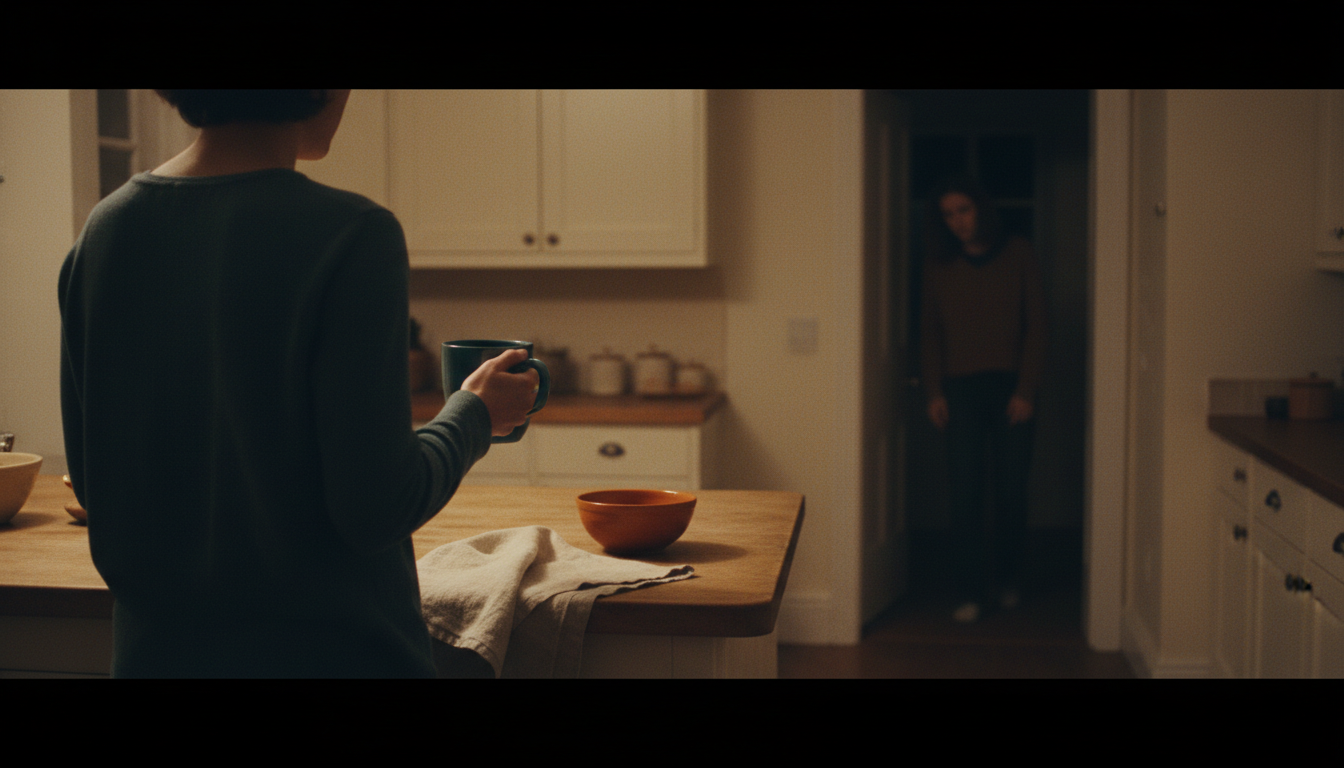
You are at the counter when your partner comes in with the post and says, "next door have put up a fence." You say "mm" and keep reading. Nobody is upset. Dinner happens and the evening is fine.
That was a bid. It was not a question you had to answer and not a favour you owed. It was a small reach in your direction, and it did not look like a request. So the question worth holding is not whether you talk enough. It is how many of those reaches arrived today, and how many of them got a turn.
The response is the thing being measured
Start with the Gottman Institute's observational work, because this idea comes from it. Couples were recorded going about ordinary moments in a lab apartment rather than arguing on cue, and in one study the newlyweds were contacted again six years later. Among the couples still married, the partners were turning toward each other's bids around 86 per cent of the time. Among the couples who had divorced, the figure was about 33 per cent. That is an observed pattern in one sample, not an experiment, so it cannot prove which came first, the habit of turning toward or the happiness. What it does show is that the reach itself was never the interesting part. The answer was.
A bid, in that language, is any small attempt at attention, affirmation, affection or company. It arrives as a question about your day, a complaint about a colleague, a sigh from the next room, a link at ten at night, a hand on your shoulder on the way past the kettle. A bid does not arrive labelled as one, and the Gottman Institute's own reading is that bids usually have a second layer under the words, which is why "next door have put up a fence" is not really about a fence.
Why turning away costs nothing and adds up
Turning toward a bid is cheap. You look up, you ask one question about the thing they said, you let them finish. Ten seconds.
Turning away is cheaper still, because it leaves no trace. The "mm" costs you nothing in the moment. You have refused nothing, been unkind to no one, and there is no minute anybody could point to afterwards. That asymmetry is the whole problem. The bill for the missed ones never arrives as a single item. It shows up later as the flat sense that the two of you do not really talk any more.
There is a second line of research that shows the same move in a narrower setting. In a set of studies by Shelly Gable, Harry Reis, Emily Impett and Evan Asher, published in the Journal of Personality and Social Psychology in 2004, couples reported how a partner responded when something good happened. Responses that asked a question and stayed with the news went with higher satisfaction, intimacy and trust, while the flat "that is nice" sat on the other side of those same associations, and the pattern held after the researchers accounted for how the same couples handled conflict. It is diary and survey work, so it describes an association rather than proving a mechanism. It also points at something useful. The response is not only a kindness, it is information, and it is the only thing the other person has to go on.
Put the two together and the unit of a relationship is not the big conversation you keep meaning to have. It is the ten seconds after a small reach.
Why the small ones get past you
Three ordinary reasons.
The first is competition. Something else is usually already holding your attention, and a bid does not interrupt loudly enough to win against it.
The second is that you are waiting for a bid that looks like one. If a request has to be direct and clearly addressed to you before it counts, a remark about the fence gets filed as small talk and never reaches you as anything else.
The third is the fear of over-reading. Turn toward a comment that was not a bid and you have answered a shrug with a question, which costs almost nothing. Miss one that was, and you have handed the other person information about which reaches land.
The experiment: the ten-second turn
For the next seven days, when your partner says something small while you are in the middle of something else, do three things in order. Stop. Turn your body toward them. Ask one question about the thing they said, and let them finish before you answer it.
If you cannot stop, name the delay instead of skipping it: "give me two minutes and then tell me", and then go back and ask. The ball can stay in your hand. The return is the part that has to happen.
One question is enough. "Say more about that" will do it, and so will "what happened then". What you are not doing is solving it, and you are not doing it while looking at a screen, because a face-down phone is still a phone in the room.
Then notice two things afterwards. How many you caught, and what the ones you caught turned out to be about. One line a night in your notes is enough of a record to see the shape of the week.
The first few times will feel like an overreaction. Answering a remark about a fence with real interest can feel as though you have misread the room and are making something out of nothing. That feeling is the cost of noticing, and it is not evidence that you have got it wrong. What comes back the first time is not something a note can tell you in advance. Saying the words is the experiment, and the answer to it belongs to the two of you.
If the small reaches land as contempt rather than a shrug, or if turning toward one is not safe in your house, then this is a different problem from the one this note is about, and a qualified professional or a local support service is the right next step, and not an article. This is relationship education, not therapy or medical advice.
Each Sunday: one question to ask your partner, the research behind it, and one thing to try. The free Relationship Checkup is open to everyone, any time.
One question a week.
Each Sunday: one question to ask your partner, the research behind it, and one thing to try. The free Relationship Checkup is open to everyone, any time.