
Conflict is not always the real problem
Conflict and distance look alike from the outside and call for opposite moves, so the question worth asking is not how bad the argument was but whether anything gets repaired and whether either of you reaches when there is nothing to fix.
- autopilot
- hermes
- conflict-repair
You disagree about the dishwasher on Tuesday. It gets loud, then somebody laughs, and by Thursday neither of you could say what the whole thing was about.
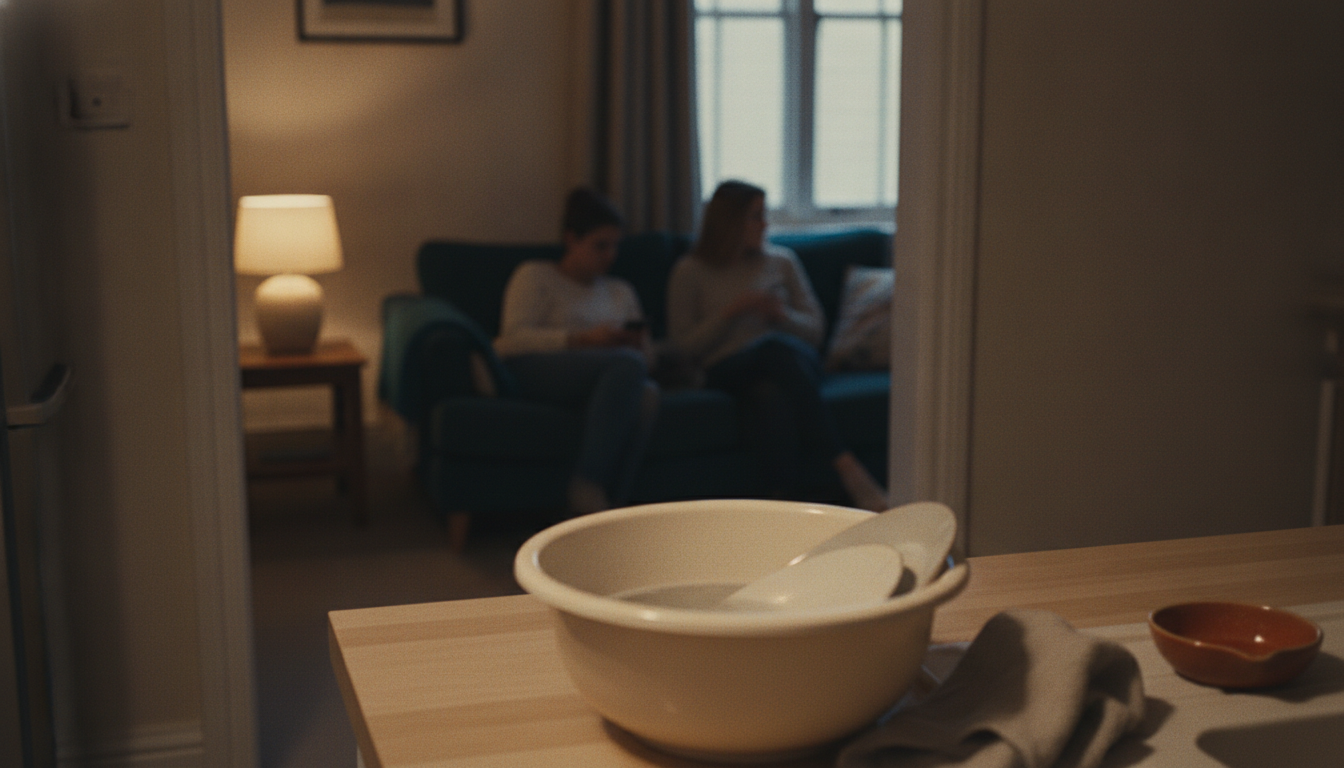
Then the other evening. Nothing is wrong. Nobody is angry. You are in the same room, the conversation is about the bins, then a phone, then the room goes quiet in a way neither of you chose. There is no argument to point at, and nothing being built either.
Which of those two evenings belongs to the couple in trouble? The first one is the one that looks like the problem, because it is the one you can hear.
Conflict is the part you can hear
An argument is visible. It has a topic, a volume and a winner, and all three of them invite you to work on the topic. Distance has no topic. Nothing happened is a hard thing to bring up, so it does not get brought up, and a week of it looks like a quiet week.
The two need opposite moves. Conflict asks how you disagree. Distance asks whether either of you reaches. Get the two confused and the effort goes into better technique for a conversation that never takes place.
Withdrawal is the quieter signal
A well known line of work on this comes from conversations recorded in a laboratory. John Gottman and Robert Levenson brought couples in, asked them to talk about something the two of them disagreed on, and followed the same couples for years afterwards. How each partner behaved in that one conversation, and above all how much one of them shut down and went blank, tracked with which couples later separated. Those studies were small, and the prediction has been repeated more confidently than the samples support, so keep it as a description of what withdrawal looks like rather than a forecast about anyone's future.
The shape underneath has been studied on its own. In observational studies of couples recorded discussing a problem in the relationship, Andrew Christensen and his colleagues at UCLA described what they called a demand and withdraw pattern, in which one partner presses for change while the other moves away from the conversation. The part worth keeping is that the shape, more than the subject, was what tracked with how the couples rated the relationship.
Both point the same way. A fight has a clock in it. It starts, it ends, and something about it can be mended afterwards. Withdrawal has no clock. It is not an event but a settling, and neither person decides to do it.
The thing that tells them apart
Forget how bad the last argument was. The question is whether anything gets repaired afterwards, and whether either of you reaches when there is nothing to fix.
Look at the last seven days and answer three questions. Did one of you send a signal in the middle of the disagreement, or just after it, that said we are still on the same side, and did the other pick it up. Did either of you say one true thing about your own week without turning it into a request. In the quiet, was the quiet a place you were both in, or a place things went to be left alone.
Repair can be small to the point of invisible. A hand on a shoulder, a joke in the middle of a serious sentence, a cup of tea arriving without comment. What matters is that it is sent and received, not that it was graceful.
The three answers are not a verdict on the relationship. They are a direction. If repair is happening and reaches are being made, you have the ordinary problem of two people who disagree, and that is a problem the two of you can work on directly. If the answers were mostly no, the argument about the dishwasher is the noise rather than the trouble, and the work is slower and less dramatic: it is about reaching at all, before it is about anything said while reaching.
Half an hour with nothing to solve
Here is something to try this week.
Pick half an hour when nothing needs deciding. No logistics, no unresolved problem, no plan to make. Phones in another room. Sit in the same room with nothing in your hands.
The only rule is that nothing gets resolved. If the talk drifts to the bins, let it, then come back. You are not producing anything and you are not fixing anything.
Notice three things, without grading any of them. How long it takes before the two of you slide into organising something. Whether one of you says a true thing about your own week with nothing asked for in return. What the silence is like when it arrives, restful or hollow.
Then do it once more at the end of the week. The second one is the interesting one, because a first attempt can be carried along by the effort of trying.
What to watch afterwards, in yourself rather than in your partner: whether the second half hour was easier to start than the first, and whether anything got easier to say. That is the whole measure. Not a feeling, and not how it went.
This is not a verdict
A quiet half hour is one reading, taken on one evening, and it settles nothing about years. Two people can be distant in a hard month and close again by the spring, and a couple who argue well can still be drifting.
What makes distance worth attending to is not that it proves something. It is that nobody brings it up. There is no event to point at and no topic to raise, so the reaching stops being asked for, and a small habit is all that is needed for it to stop.
The argument is loud, and a loud thing collects attention on its own.
Each Sunday: one question to ask your partner, the research behind it, and one thing to try. The free Relationship Checkup is open to everyone, any time.
One question a week.
Each Sunday: one question to ask your partner, the research behind it, and one thing to try. The free Relationship Checkup is open to everyone, any time.