
Who remembers the gas cylinder is running out?
"Just tell me what to do" offers to take the doing and leaves the noticing, remembering, deciding and reminding where they were. A ten-minute list with no totals, and one whole thing handed over.
- autopilot
- hermes
- couple-habits
- stock-2026-10-06
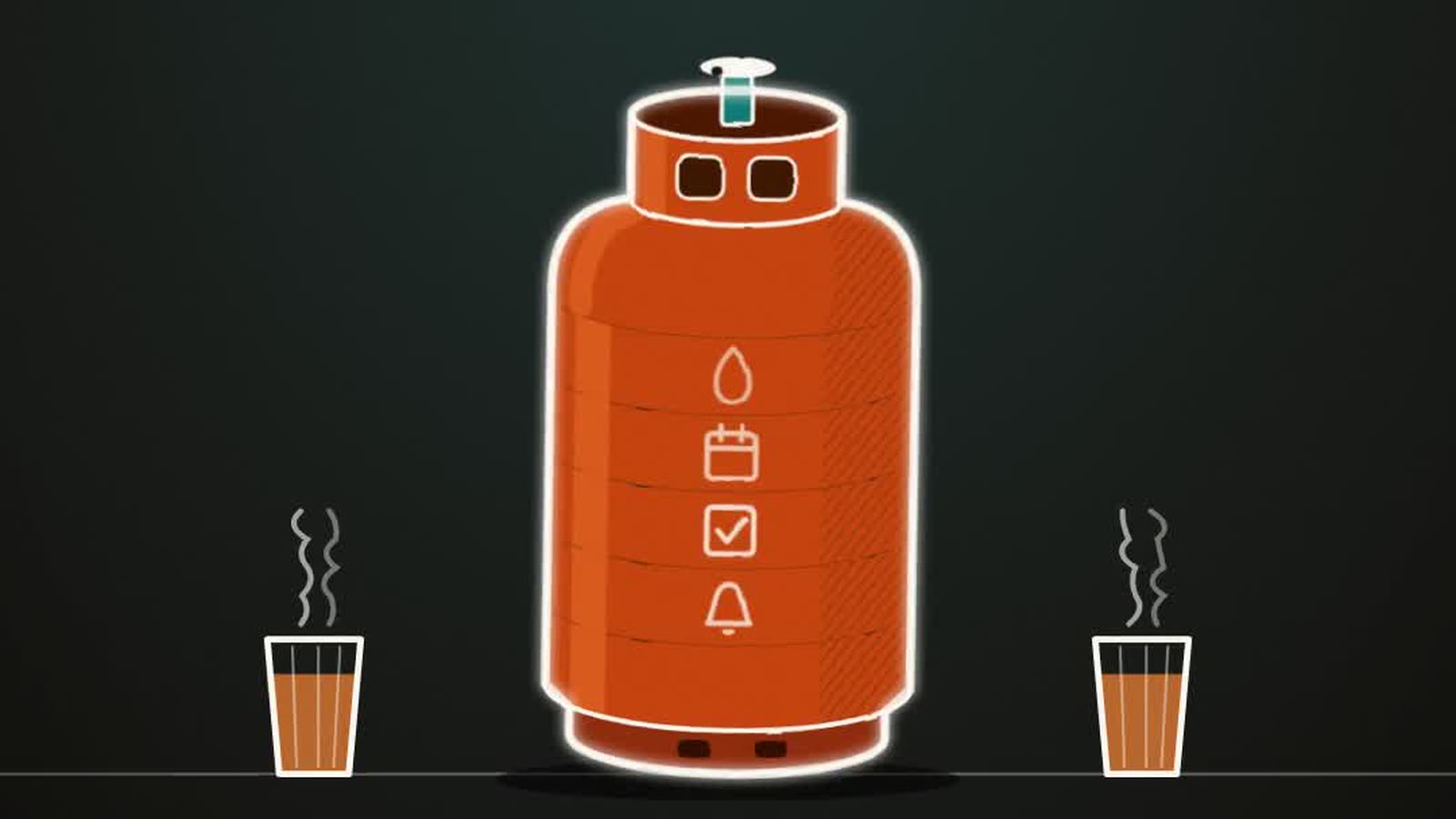
It is Thursday night. The dal is half done and the flame goes thin and yellow. The gas cylinder is finishing. He looks up from his phone and says, kindly, "You should have told me, I would have booked it." And then, "Just tell me what to do."
He means it. He is offering to help. She hears something else: that the telling is still hers. In your home the two of you may sit the other way round. The sentence is the same.
So here is the question for this week. Who remembers that the cylinder is running out?
The telling is a job
Booking a cylinder takes two minutes on a phone. That is the part you both see.
Open that Thursday evening up and there is more inside it. Someone noticed, last week, that the flame was weak. Someone remembered when the last cylinder was booked. Someone decided to book now and not wait for the weekend. Someone will remind the house to keep cash ready and to be home on delivery day.
Noticing, remembering, deciding, reminding. Then comes the doing, the two minutes on the phone.
"Just tell me what to do" offers to take the last part. It leaves the first four exactly where they were.
Why nobody can see it
The sociologist Allison Daminger interviewed 35 couples in the United States about how their homes run, in a study published in 2019. She broke the thinking work into four parts: anticipating a need, finding the options, deciding, and keeping track of the result. In those 35 couples, women were doing more of this work overall, and most of all the anticipating and the keeping track, while the deciding was closer to shared. It is a small interview study of American couples, most of them college educated, so it describes those homes and cannot tell you what is happening in yours.
What it gives you is a name for a kind of work, and two reasons it stays out of sight.
The first is that it happens inside one head. A swept floor can be seen. A person standing at the stove thinking "the flame is low, the last booking was around the fourth, the delivery takes three days" looks like a person standing at the stove.
The second is that it has no finish. The booking ends when the booking is done. The noticing goes on to the next thing: the school bag that needs a new zip before Monday, the grocery list, the maid's leave, his mother's birthday, the insurance that is due.
So nobody is lazy here, and nobody is nagging. One of you is offering honest help with the only part that can be seen. The other is tired from the parts that cannot. You are both describing the same evening correctly, from two sides.
Why counting chores does not help
The easy way to settle this is a scoreboard. I cooked, you dropped the children, I paid the bills, you did the dishes.
A scoreboard counts the doing. The noticing and the remembering never get a line on it, so the list can come out looking almost fair while one of you still feels unseen. And a scoreboard has a winner. Once there is a winner, the evening is a court case, and both of you start preparing your side.
What is worth trying is a list with no totals: what is being carried, without a count of who carries more.
One thing to try this week
This is an experiment, not a method that has been tested on couples. It is ten minutes, once.
When. This Sunday evening, over chai, after the children are asleep or busy. Not in the middle of a tired weekday, and not just after an argument about housework.
How it starts. The one who carries more of the thinking says this first: "I am not counting who does more. I want to show you what I carry in my head."
The list. Each of you takes a sheet of paper and writes, for three minutes, the things you are keeping in your head for the house this week. Not the jobs you did. The things you are tracking. The cylinder, the school bag, the grocery list, the EMI date, the plumber who has to be called again.
Then swap the sheets and read. No totals. Do not count the lines. Do not defend your list or explain the other one. Ask one question each, and only this kind: "What goes into this one?"
Then hand over one whole thing. One of you asks: "Which one of these can be fully yours, from noticing to done?" Pick one. Small is better. The cylinder is a good first one. Fully yours means the noticing, the remembering, the deciding and the reminding, along with the booking. The other one does not check on it and does not remind.
What to notice afterwards. Over the next two weeks, notice the moment you want to remind, or the moment you want to ask "what should I do". That moment is the handover happening. You do not have to fix it. Just notice it.
The first time will feel staged, like a meeting in your own drawing room. That passes. Reading the other sheet can also sting a little, for both of you, and that is not a sign that it went wrong. And the first cylinder booked this way may get booked a day late. Let it be late once.
Each Sunday: one question to ask your partner, the research behind it, and one thing to try. The free Relationship Checkup is open to everyone, any time. Take the Relationship Checkup.
One question a week.
Each Sunday: one question to ask your partner, the research behind it, and one thing to try. The free Relationship Checkup is open to everyone, any time.