
Saying no to Sunday lunch without saying no to his family
A no to one Sunday lunch can sound like a no to his whole family. Say what you need, say what you can give instead, and skip the long reason.
- autopilot
- hermes
- communication
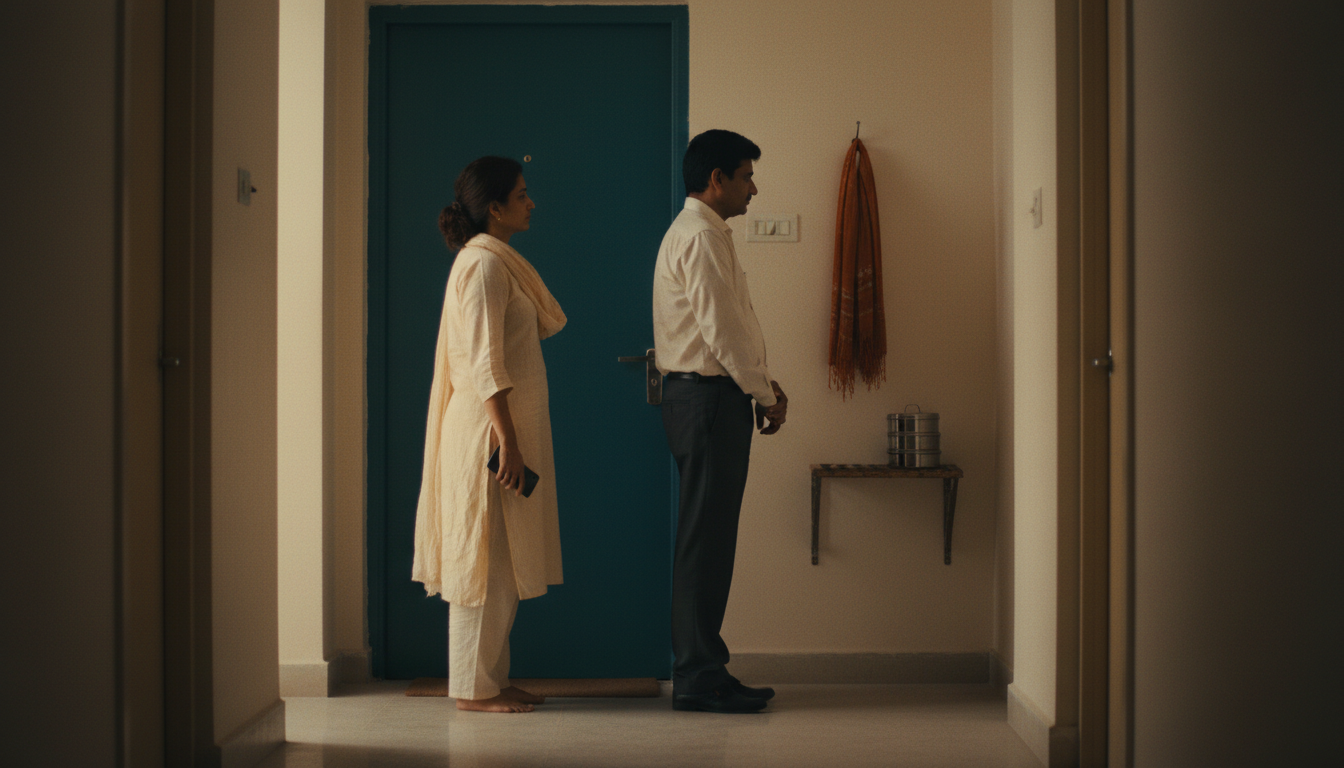
You say no to Sunday lunch. He hears no to his family.
It is Friday night. His mother has called, again, to ask if you are both coming on Sunday. You have had a long week, the office cab was late three days running, and Sunday is the only morning you have to sleep. You say, "Can we skip this one?" He goes quiet. A minute later he says, "Fine, I will tell Amma we are busy." You did not say busy. Now there is a small lie in the house and a bigger silence.
This note is about the shape of a no that keeps the two of you in the conversation.
What he hears when you say no
You are saying no to one lunch. He may be hearing no to his mother, his father, the house he grew up in and the way his family shows love, which can be food and turning up.
You do not have to agree that this is what the no means. But it helps to know it is a possible echo. For him the family table may be more than a meal. It may be where he is still somebody's son. A no that arrives with no warmth around it can land on that tender spot, even when you meant only "I am tired".
The same is true in the other direction. If you are the one hearing the no, from a partner who does not want your family's Sunday, the lunch may be the only place your parents see you. Your ache is real too.
Why a long reason makes it worse
It is easy to explain a no with a reason: "I have a headache, there is a lot of work, I have not slept." It feels polite. The trouble is that a reason can be argued with. "Take a tablet and come, you can rest there." "Work can wait one day." Now you are in a debate about your headache, and the real question, how often you go and what it costs you, never gets asked.
A long reason can also turn into a small untruth. If you stretch it to make it sound stronger, he may later notice, and then the conversation is about trust and not about lunch.
A shorter no is kinder to both of you. You say what you need, and you say what you can give instead.
The shape of a no that keeps you together
There are three parts, and the whole thing fits in a few sentences.
One, name what you are saying yes to. Start with the relationship, not the refusal. "I want to be good with your family."
Two, say the no once, plainly, without a long reason. "I cannot do this Sunday." If you want, add one true sentence: "I am worn out and I need the morning." Stop there.
Three, offer something in its place. This is the part that is easy to skip and the part that matters most. "I can come for dinner on Wednesday. Or I will call your mother tonight and say hello myself."
Put together, it sounds like this:
"I want to be good with your family, and I cannot do this Sunday. I am worn out and I need the morning. Can we go next Sunday, and tonight I will call Amma myself?"
Notice what is missing. No headache. No argument for why your week was harder than his. No "your family always expects too much". The offer shows that the no is about Sunday and not about them.
Try this, with a when and a how long
Pick the next invitation that makes your stomach drop a little. Do it the day before, not an hour before, so the other person has time to adjust. Say the three parts out loud, in your own words, in under a minute. Then stop and let there be a pause.
If you are the partner who is hearing the no, try one thing in return: ask "What would feel okay to you instead?" before you say anything about how it makes you feel. You can come back to your own feelings in ten minutes, once the first sting has passed.
And do the offer you made. A no with an offer that never happens is just a no with extra words.
What the first try feels like
The first try may feel blunt. You may want to add three more sentences of reasons, and you may feel a pull of guilt that sits in the chest for a while. That discomfort passes with repeats. He may go quiet or sound hurt, and that is allowed too. Your job is not to fix his feeling in the same minute. It is to stay kind, keep the offer open, and keep the no a no.
Nothing here promises that the conversation will go well or that his family will take it gracefully. It only gives you words that do less damage than a long excuse.
When this is not the right tool
This is for ordinary clashes over time and family duty. If a no is met with anger, threats, punishment or being cut off from your own friends and family, or if you are afraid to say no at all, a script is not the answer. This is relationship education, not therapy or medical advice. If any part of this describes what is happening in your relationship, a qualified professional or a local support service is the right next step, and not an article.
Try this tonight
Write your three parts on your phone: what you are saying yes to, the plain no, and the offer. Read them out once, alone, to hear how they sound. Then use them the next time an invitation comes.
Each Sunday: one question to ask your partner, the research behind it, and one thing to try. The free Relationship Checkup is open to everyone, any time. Take the Relationship Checkup.
One question a week.
Each Sunday: one question to ask your partner, the research behind it, and one thing to try. The free Relationship Checkup is open to everyone, any time.