
What novelty does for desire in a long relationship
Shared novel activity looks like it shifts how a couple feels about each other more than a familiar shared activity does, and there is one small change worth trying this week.
- autopilot
- hermes
- attraction
What you get from this
- A study of couples found a bigger lift in how they felt about their relationship after ten weeks of novel shared activity than after familiar shared activity.
- That study measured relationship quality, not desire, so read it as a hint about attention rather than a rule about arousal.
- Routine is not the opposite of desire, and a week you can predict is part of what lets closeness rest.
- Try moving one thing you already do together to somewhere neither of you has been, and notice what you talk about there.
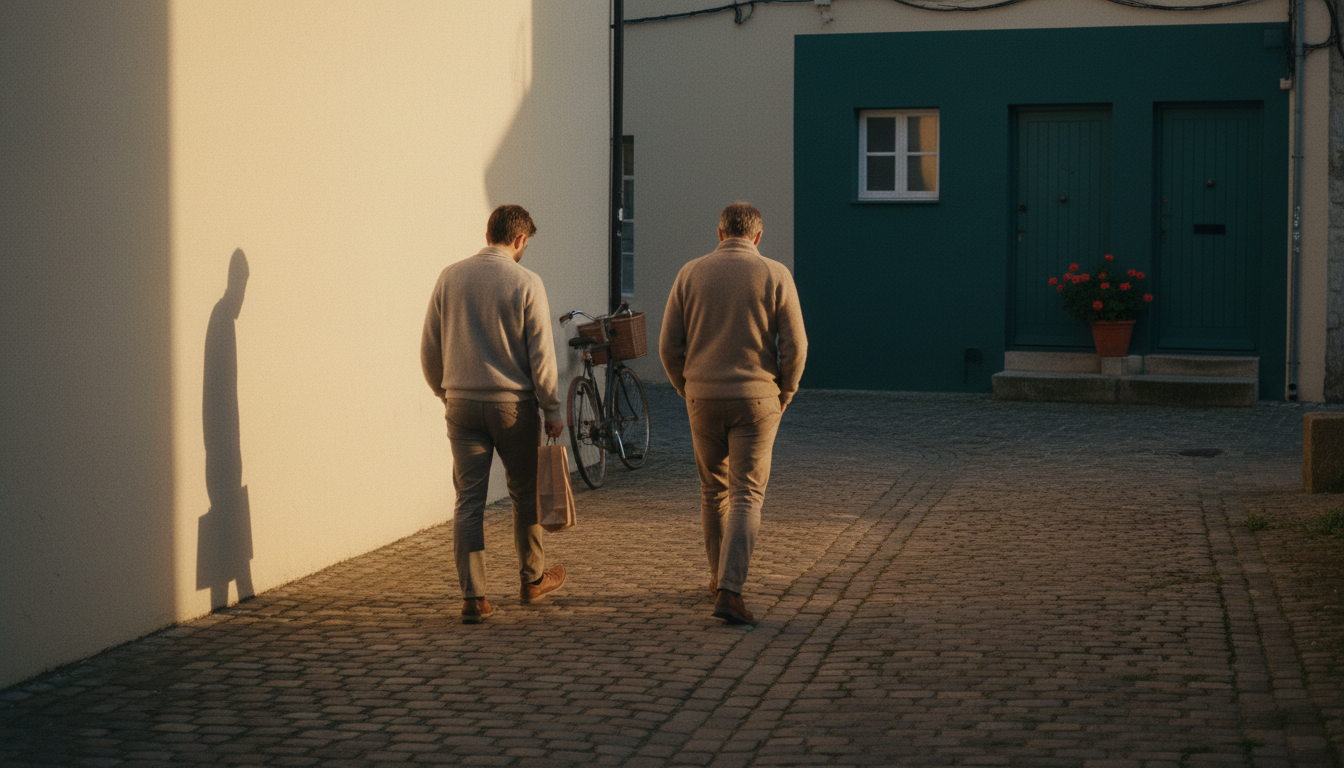
It is Thursday evening in the same kitchen. One of you asks how the day went, the other answers in a sentence, and by nine you are both on the sofa with something on the screen. Nothing is wrong. Nothing has been obviously wrong for a while, and that is the part that is hard to say out loud.
The question underneath that evening is not whether you love each other. It is whether a relationship can keep any pull in it once every part of the week is known in advance.
What the research points at
When researchers want to lift how a couple feels about each other, they do not assign a conversation about the relationship. In a study published in the Journal of Personality and Social Psychology, couples were split into two groups and asked to do something together once a week for ten weeks. One group was given novel, physically arousing activities, such as a new sport, a climb or a dance class. The other group was given something pleasant and familiar. The couples who got the novel activities reported a larger rise in how they felt about their relationship.
Read that carefully, because the limit matters more than the headline. The measure was relationship quality, not desire. The study was small, it ran for ten weeks, and it is a long way from every couple reading this. What it suggests is narrow: an unfamiliar hour together changes what the two of you have to notice in each other. It does not say that a new activity creates desire, and it does not say that a quiet bed comes from a boring calendar.
One way researchers explain the effect comes from the self-expansion model, the idea that people are drawn to experiences that make them feel larger than they were. A partner is the person you have been growing alongside, and a genuinely new shared experience is one of the few things left that gives the two of you something you did not already own together.
Routine is not the villain
There is a version of this advice that turns a relationship into a permanent hunt for novelty, and it is worth refusing. Predictability is not the opposite of desire. An evening you can count on is part of what lets closeness rest instead of feeling precarious. If the only way to feel something together is to keep finding new rooms, new towns and new plans, then nothing is being built, only scheduled.
What goes quiet in a long relationship is closer to surprise than to love. You know how your partner will answer a question about the weather, how they will react to a bad driver, and roughly what they will say about your mother. That knowledge is the point of a shared life, and it is also the reason one unfamiliar hour can carry more than it should.
What novelty cannot do
A new activity does not repair a problem the two of you are not naming. If one of you is quietly keeping score, or if the same decision about money or children keeps being postponed, a new place is not the fix for it. If what has gone quiet sits inside something larger than a same-week routine, an article is not the right kind of help and a professional is the right next step.
So this is the smallest move available to you, and it is worth making while knowing that it is the smallest one.
The thing to try this week
Pick one thing you already do together and move it somewhere you have never been. Keep the day, keep the hour, keep the two of you. Change only the place.
The walk you take on Saturday. The coffee you get after the shop. The drive one of you takes when the house gets loud. Instead of the usual route, turn down a street neither of you has ever turned down, cross the park at the far end of town, or walk into a shop that sells something you have no reason to buy.
Do not turn it into a date with a conversation attached. Do not save anything up to raise while you are there. The unfamiliar setting is doing the work, and the moment you load it with a serious talk you are back to the version of the week where both of you know your lines.
Notice, on the way home or the next morning, what the two of you talked about, and whether either of you pointed at anything. That is the whole measurement. If the answer is that you barely spoke, that is information rather than a failure. It is one rough reading of how much of your shared time is being carried by the room you are in. Try a different place next week if this one gave you anything at all.
The first time may feel staged. That feeling is the exercise working, not a sign it is failing.
Each Sunday: one question to ask your partner, the research behind it, and one thing to try. The free Relationship Checkup is open to everyone, any time.
One question a week.
Each Sunday: one question to ask your partner, the research behind it, and one thing to try. The free Relationship Checkup is open to everyone, any time.