
Walking out mid-fight, and the line to say first
Walking out to calm down can look like leaving. Three short lines said before the door shuts, a time on the clock, and coming back first turn it into a break.
- autopilot
- hermes
- conflict-repair
- stock-2026-10-06
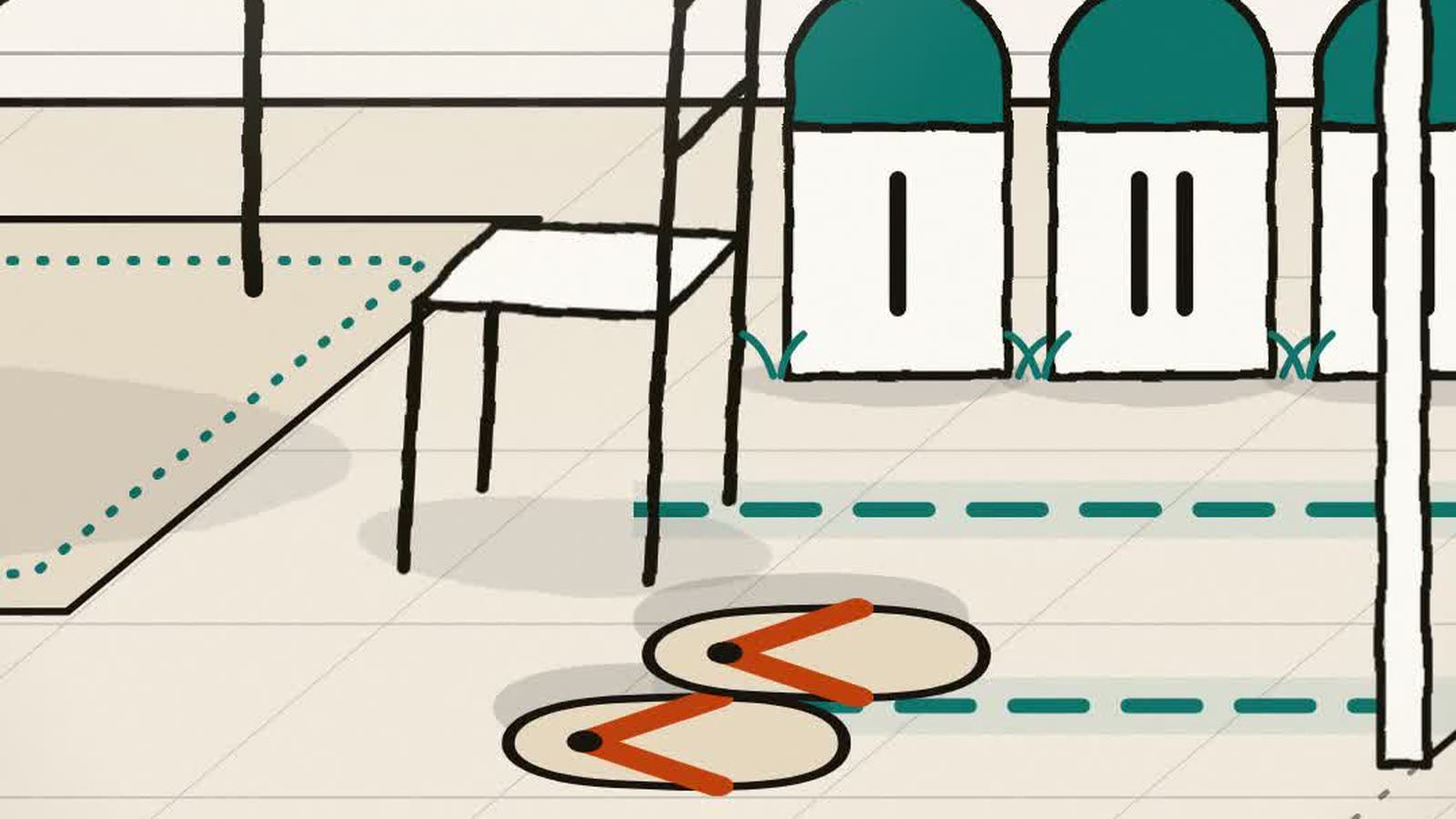
It is 9:40 on a weeknight. The talk started with who forgot to pay the electricity bill, and it is now about everything. Your heart is pounding. You cannot listen any more, and the next thing you say may be something you cannot take back. So you get up and go. No word. The door shuts behind you.
You walked out to calm down. She saw you leaving. In your home the two of you may sit the other way round.
So here is the question for this week. How do you take a break in the middle of a fight without it looking like walking out?
The same door, from two sides
You left so that you would not say something cruel. From her chair, there is only what can be seen. A person got up in the middle of her sentence and shut a door. A shut door can look like your answer: I am done with this talk, think what you like.
Maybe she follows you down the corridor to finish her sentence. Maybe she goes quiet and stays quiet till morning. Either way the fight can become a fight about the leaving, and the electricity bill is forgotten.
The break is not the problem. The silence around it is.
What the break is for
John Gottman is an American psychologist who has spent decades watching married couples argue in a research lab, with their heart rates measured while they talk. He uses the word flooding for the state you were in at 9:40: the heart racing, the body ready for a fight, and very little room left to listen. In his books for couples he suggests stopping the talk when one of you is flooded and staying apart for at least twenty minutes, because in his account the body takes about that long to settle.
He also describes one exercise from his lab. Couples were stopped in the middle of an argument and asked to read magazines for about half an hour without discussing the issue. When they started again, he reports, their heart rates were lower and the talk went better.
This is one researcher's lab work with American couples, and his advice is built on it. It is not a rule tested in homes like yours, and twenty minutes is a starting figure, not a law. What it gives you is a reason. The break is for the body. It is not for winning, and it is not for making the other person wait.
Three things to say before you go
The door needs words before it shuts. Three short ones.
One: what is happening in you. "I am too worked up to talk well."
Two: that you are not leaving the talk. "I am not walking away from this." This is the line a shut door cannot say for you.
Three: the time. "Give me twenty minutes. I will be back at ten." Name a time on the clock. A time on the clock is something she can hold while you are gone.
The twenty minutes
Leave the room and not the house, if you can. The balcony, the other room, a walk to the end of the lane and back.
Do something that slows the body. Wash your face. Drink a glass of water. Water the plants. Gottman's advice here is plain: a break spent going over what you should have said is not a break. If you catch yourself preparing your next point, that is the fight carrying on with one person in it.
Coming back
At ten, you walk back in. You, the one who left. She should not have to come and find you.
And you speak first. "I am back. I want to hear the rest of what you were saying." Then let her finish the sentence the door cut off.
If you are not calm at ten, come back at ten anyway and say so: "I am back, and I am still not ready. I need twenty more. I will be back at ten twenty." Coming back on time is the part that makes the next break believable.
What a break is not
A break is a pause the two of you have agreed to. It has a time, and it ends with you back in the room.
Going silent for the evening to teach her a lesson is not a break. Leaving without a time, and coming back when you feel like it, is not a break.
And none of this is for a home where one of you is afraid of the other, or where one of you is not free to leave a room or to disagree. This is relationship education, not therapy or medical advice. If any part of this describes what is happening in your relationship, a qualified professional or a local support service is the right next step, and not an article.
One thing to try this week
This is an experiment, not a method that has been tested on couples.
When. Tonight, or any evening this week while nothing is wrong. After dinner, over chai, ten minutes.
What you say. "When we fight, I sometimes walk out to calm down. I want us to agree on how either of us can take a break."
What you agree. The three lines above, in your own words if these feel stiff. The length: twenty minutes to begin with. Where each of you goes. And that the one who leaves is the one who comes back and speaks first. Either of you can call the break. The other one lets them go, without following.
What to notice afterwards. The next time a talk gets hot, notice the moment just before you would have got up without a word. That is the moment the three lines are for.
The first time will feel staged, like reading out a notice in your own drawing room. That passes. The twenty minutes may also feel very long to the one who stays in the room, and it is fair for her to say so afterwards.
Each Sunday: one question to ask your partner, the research behind it, and one thing to try. The free Relationship Checkup is open to everyone, any time. Take the Relationship Checkup.
One question a week.
Each Sunday: one question to ask your partner, the research behind it, and one thing to try. The free Relationship Checkup is open to everyone, any time.