
A complaint and a criticism are not the same thing
One sentence is about a thing that happened and the other is about who your partner is, so here is the same grievance said both ways, what changes, and a three-part rewrite rule to try this week.
- autopilot
- hermes
- communication
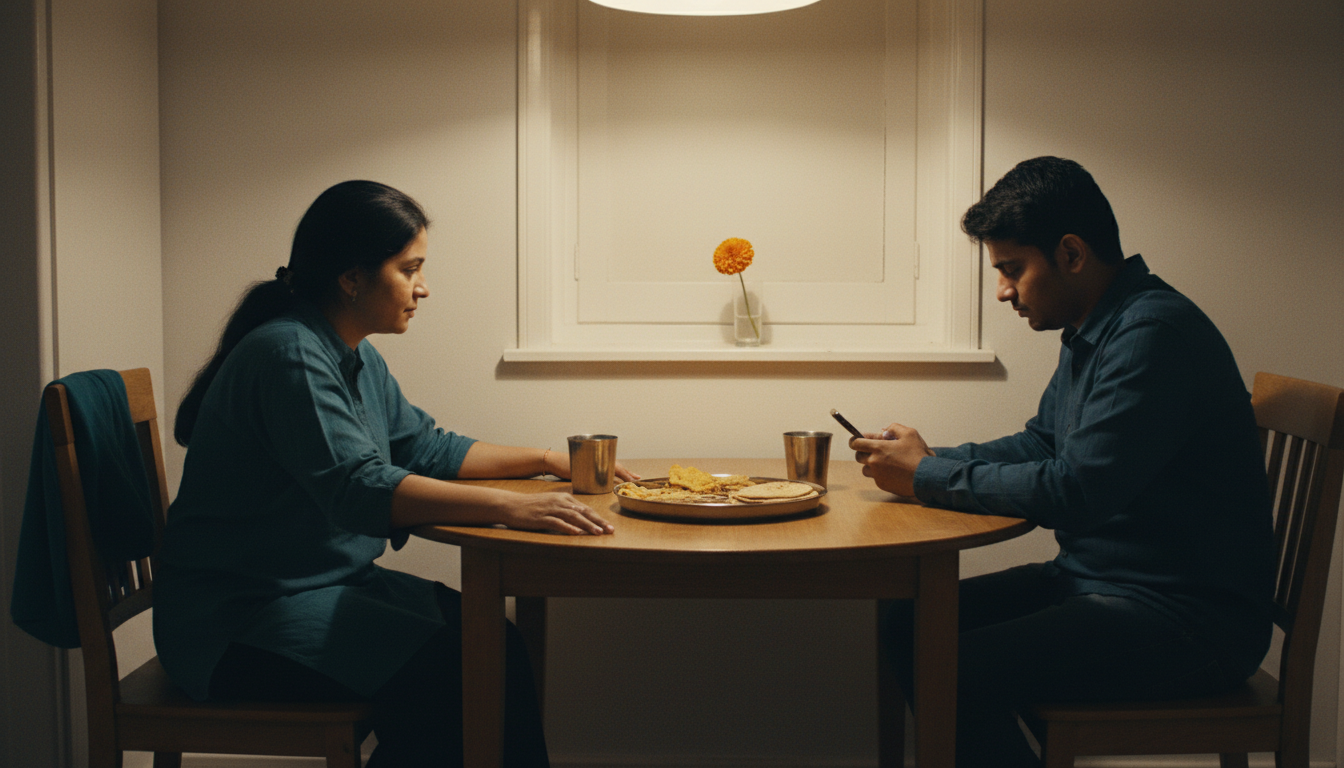
You came home late again. The dinner you planned is cold, and you are tired of being the one who waits. So you say it: "You never think about anyone else."
Your partner goes quiet, or says "here we go". The thing you wanted to talk about, the late night and the cold dinner, is now nowhere in the room. You are both talking about who your partner is.
That is the gap between a complaint and a criticism. One is about a thing that happened. The other is about a person.
The same grievance, said two ways
Take the late evening.
- Criticism: "You never think about anyone else. You are so selfish."
- Complaint: "You said you would be home by eight. It was ten and I had not heard from you. I felt ignored."
Both are honest. Both come from the same hurt. But they land very differently, and the difference is not tone of voice or how loudly you say it. It is what each sentence points at.
The criticism points at your partner's character: "never", "so selfish". There is nothing your partner can do with that except defend themselves or hit back. You cannot fix a character in one evening, so the argument has nowhere to go.
The complaint points at one event, on one night, and at what it did to you. Your partner can answer that. They can say "my meeting ran over, and I should have called". That is a conversation, not a trial.
What researchers say about it
Relationship researchers who watch couples talk, John Gottman and his colleagues among them, separate a complaint from criticism in exactly this way. In their observational studies of couples, criticism is one of the habits that tends to appear in couples who struggle. That is observational work, so it shows a pattern in the couples they watched and does not prove that criticism causes the trouble. It is still a useful thing to notice in your own home, because it is something you can change in a single sentence.
Why criticism slips out
Nobody plans to criticise. You are tired, you have said the same thing four times, and the word "always" arrives before you can stop it. When the evening is short and the family is in the next room, the hurt can come out in its shortest form, which is a label.
A label feels like a complaint to the person saying it. To the person hearing it, it feels like a verdict.
The rewrite rule
When you notice a criticism forming, rewrite it in three parts:
- When: the one moment you mean. "Last night." "On Sunday at your mother's."
- What happened: only what a camera would have recorded. "You were on your phone while I was talking."
- What it did to you, or what you would like: "I felt alone. Next time, can you put it down for five minutes?"
Notice what is missing. There is no "always", no "never", no "you are". Those three words are how a complaint turns into a criticism.
One experiment for this week
Pick one small irritation. Not the biggest one in your marriage or relationship, just something ordinary like the phone at dinner, the pile of clothes, or the call you did not get.
Before you say anything, write the criticism version on your phone, once, in your own words. Look at it. Then write the three-part version underneath. Say only the second one, tonight or tomorrow, at a time when neither of you is rushing, even if it is just ten minutes with chai on the balcony.
The first try will feel slow and a little stiff, as if you are reading from a form. A new way of speaking often feels like that at first, and it eases as you repeat it. Your partner may still get defensive, and that does not mean the rewrite failed. Notice instead whether the conversation stays on the thing that happened, or slides back to who each of you is.
When this is not the right tool
This is relationship education, not therapy or medical advice. If any part of this describes what is happening in your relationship, a qualified professional or a local support service is the right next step, and not an article.
If criticism in your home comes with fear, with being controlled, or with name-calling that does not stop, a rewrite rule is not the answer. That needs a trained person.
Where to go next
Each Sunday: one question to ask your partner, the research behind it, and one thing to try. The free Relationship Checkup is open to everyone, any time. Take the Relationship Checkup.
One question a week.
Each Sunday: one question to ask your partner, the research behind it, and one thing to try. The free Relationship Checkup is open to everyone, any time.