
The fight you are having on WhatsApp
A typed message carries your words and leaves your tone behind, so your partner reads it in the voice he fears. Here is what to keep out of the chat, and one line that moves a sharp chat back to a room.
- autopilot
- hermes
- communication
- stock-2026-10-06
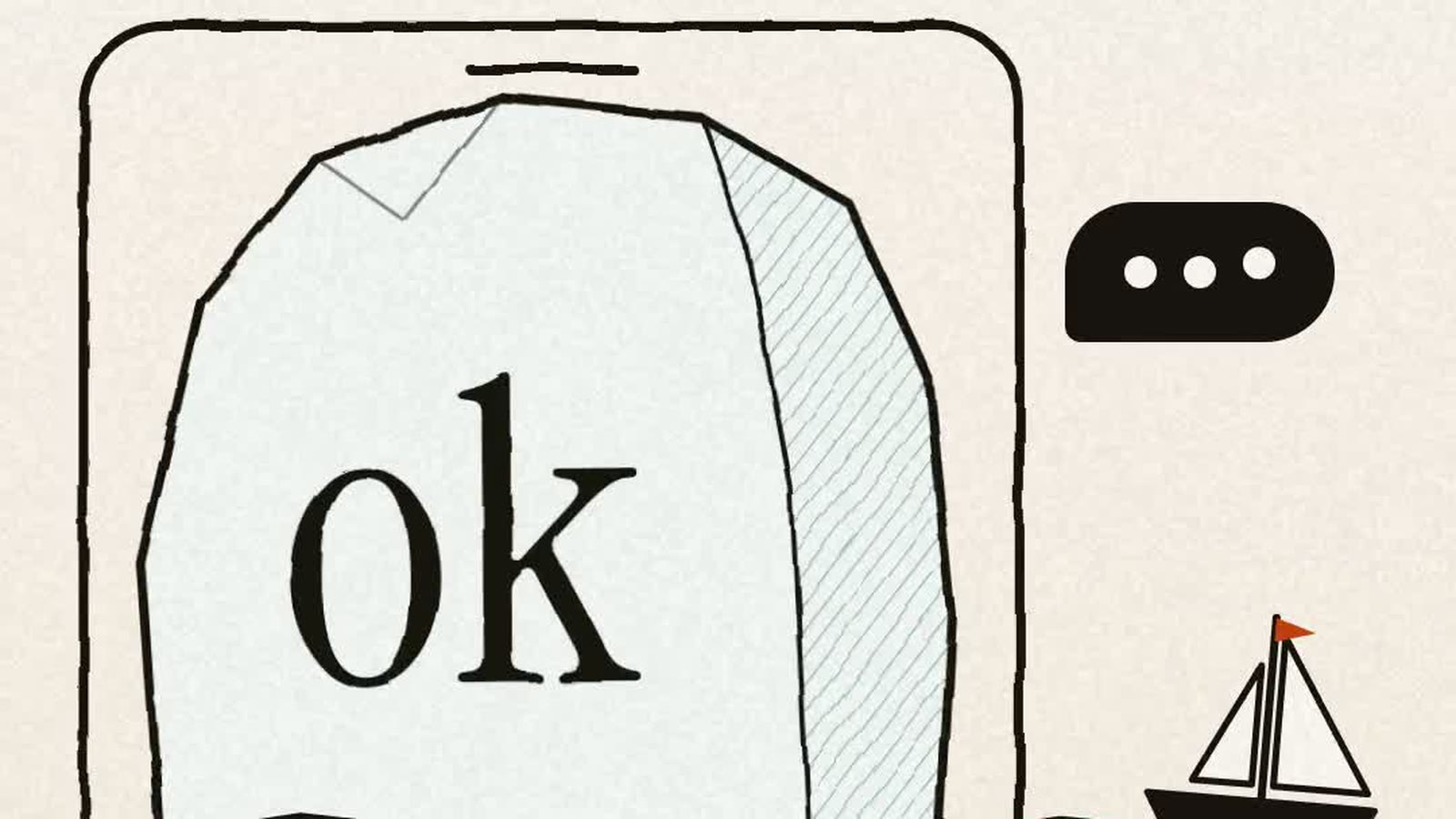
You type "ok". You mean tired. He reads angry.
It is 6.40 in the evening. He has messaged from the office cab: "Mummy is asking if we are coming on Sunday." You have had a long day and one hand is on the pressure cooker. You type two letters and put the phone down. Twenty minutes later there is a paragraph waiting for you, and it is not about Sunday any more.
So here is the question. Why does a message between two people who love each other read so much worse than it was meant?
What a message leaves out
When you say "ok" across a room, he gets your face, your shoulders, the tiredness in your voice. He can see you are stirring dal with one hand. On a screen he gets two letters.
The tone is not in the message. The reader supplies it. And he supplies it from his own evening: the traffic, the call with his mother, the worry that you did not want to go on Sunday in the first place. He reads your "ok" in the voice he is afraid of.
The harder part is that you cannot hear what is missing. When you type, you hear your own tired voice in your head, so the message sounds complete to you. In a set of experiments with university students, the psychologists Justin Kruger and Nicholas Epley and their colleagues asked people to email statements that were meant to be either serious or sarcastic. The writers were confident their tone would come through. The readers got it right less often than the writers expected. The students were not couples and the emails were not about anyone's mother, so treat it as a clue and not a verdict. But it fits the kitchen and the cab closely: the one who writes hears a voice, and the one who reads has to invent one.
There is one more piece, and it is about what we choose to type. In a survey of young adults in committed relationships, Lori Schade and her colleagues at Brigham Young University found that the women who used texting to apologise, settle differences or make decisions tended to report lower relationship quality. That is a link, not a cause. It may be that couples who are already struggling take more of it to the phone. Either way, it is a reason to look at what you are sending in writing.
What should never start in writing
A message is good at facts. "Cab at 7." "Milk is over." "Reached." It is also good at small warmth: a photo of the dog, "thinking of you", "eat something".
It is poor at anything where the feeling matters more than the fact. As a working rule, worth trying and not proven, keep these out of the chat:
- An apology. It needs your face with it.
- A complaint about something he did.
- A decision about money, family or the children. The EMI, Sunday at his mother's, whose turn it is.
- Anything that begins "we need to talk".
- Any message you have typed and deleted twice. The deleting is the sign.
And one more: a chat that has already turned. If the last three messages have been getting shorter or sharper, the conversation has left the place where writing can carry it.
How to move it back to a room
You do not need to win the chat or end it well. You need to stop it and name a time. Send one line:
"This is reading worse than I mean it. Can we talk at home, after dinner?"
Three things are in that line. It says the problem is the reading, not him. It says you are not walking away. And it gives a when, so the silence that follows is a wait and not a punishment. If you are in different cities this week, the room is a call: "Can I call you at nine?"
Then stop typing. Do not add one last point. Do not explain the "ok". Put the phone face down.
When you are in the same room, begin with what you meant, before anything else: "When I typed ok, I meant I was tired. I was not angry about Sunday." Then ask what he read. Let him finish.
One thing to try this week
The next time a chat with your partner turns sharp, do not answer the last message. Send the one line, with a real time in it. Tonight after dinner, on the balcony, after the kids sleep. Then keep the time.
Notice two things afterwards: how long the talk in the room takes compared with the chat, and what the "ok" turned out to mean on each side.
The first time, it feels like running away from the chat, and a little staged. Your thumb wants to send one more message. He may send one too. That is the uncomfortable part, and it passes. This note cannot say how your partner responds. It can only say that a face carries what two letters cannot.
Each Sunday: one question to ask your partner, the research behind it, and one thing to try. The free Relationship Checkup is open to everyone, any time. Take the free Relationship Checkup.
One question a week.
Each Sunday: one question to ask your partner, the research behind it, and one thing to try. The free Relationship Checkup is open to everyone, any time.