
The ritual you already have and never noticed
The repeated moment that keeps your week steady is usually the one nobody has named, so here is how to find yours, four questions to check it, and one rule to protect it before it quietly goes.
- autopilot
- hermes
- couple-habits
What you get from this
- A routine is repeated to get something done. A ritual is a routine that has been given meaning, which is the part nobody names.
- A review of fifty years of studies of family life found families who kept strong rituals reported closer relationships, though mostly correlational.
- A ritual disappears quietly because nothing ends it. A changed shift or a new baby simply takes the slot.
- This week, each of you names one repeated moment from the last seven days that was good, as a moment, not a feeling.
- Ten minutes, once, then guard that slot with one rule and see whether the moment survives the week.
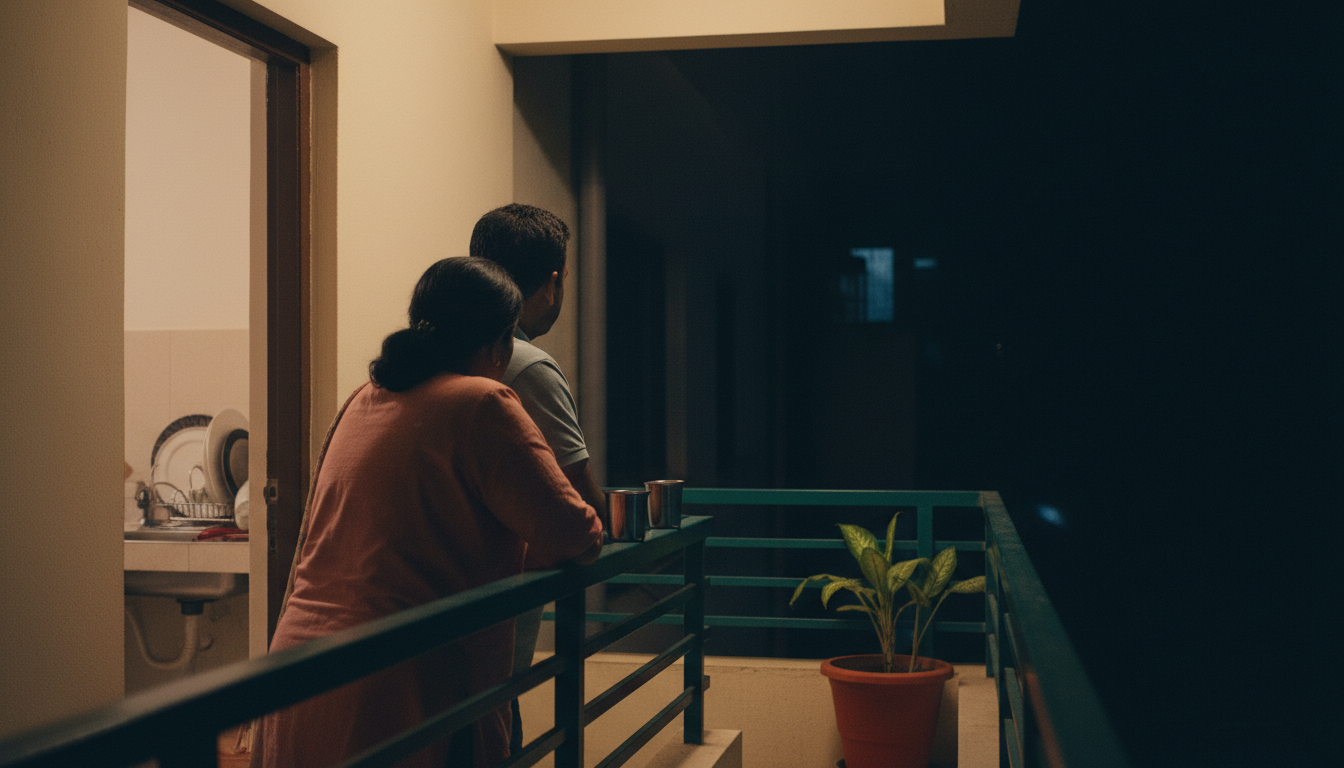
It is half past nine on an ordinary Tuesday. The plates are stacked in the sink, the younger one is finally asleep, and the two of you are on the balcony with the last of the chai. She mentions a colleague who resigned. You laugh at the wrong part, and she laughs at you. Ten minutes later the cups are empty and you both go inside. Nothing about that half hour cost either of you anything.
Which part of your week would you name if someone asked what still works?
You can list what does not, without pausing. The argument that starts about the phone and ends about your mother. The way a message from her family changes the temperature of an evening. The sentence you said in the car. The parts that are still good are the ones nobody has had to name, because they run without anyone's help.
Two words that look the same and are not
Researchers who study family life separate two things that look identical from the outside. A routine is repeated to get something done: the school run, the seven o'clock alarm, the Sunday grocery. A ritual is repeated and given meaning. In a review of fifty years of studies of family routines and rituals, Barbara Fiese and her colleagues at Syracuse University found that families who kept strong, meaningful rituals also reported closer relationships, and their children generally did better on the measures those studies used. Most of the studies were correlational, so they show the two moving together rather than one causing the other.
The interesting part sits just beside that finding. A ritual is almost never planned. Nobody sits down and designs the ten minutes on the balcony. It forms because two people are in the same place at the same time, often tired, often not trying, and it asks nothing of either of you.
Why it disappears without a fight
Nothing ends a ritual. That is what makes it fragile. There is no argument, no decision, no announcement. A shift changes. A baby arrives. Your mother comes to stay for a festival week. Exams start. One of you begins taking calls after dinner. The ten minutes go to something else for three nights, then ten, and then they are simply gone, and neither of you can say when. The moment that was carrying the week never had a name, so there was nothing to notice was missing.
Naming it is most of the protection. A thing you can say out loud is a thing you can put back.
One thing to try this week
This takes ten minutes and nothing else. Do it at the end of an evening, when the house has gone quiet.
First, each of you names one repeated moment from the last seven days that was good. A moment, not a feeling. "The ten minutes after the lights go off, when you tell me about the office." "Sunday morning tea before anyone else is up." "Walking you to the gate when the cab comes." Keep it small enough that you both know exactly which moment is meant.
Second, put that moment through four questions:
- When does it happen, and how long does it take?
- Who else has to be there, or asleep, or out of the house?
- What is it made of, the tea, the walk, the words, the silence?
- What has changed in the last month that could take that slot?
If the answers come easily, the moment is still there and you now know where it lives. If they come slowly, if neither of you can say when it last happened, then the moment has already slipped, and the last question usually says why. That is not a verdict on the week. It is just the first time anyone has looked.
Third, guard the slot with one rule, and make it a rule about the world rather than about each other. The phones stay in the kitchen for those ten minutes. The balcony chai is not where the electricity bill gets discussed. The walk to the gate is not where the day's complaints get listed, and if it already is, move one of them to a different time.
Then, at the end of the week, notice whether the moment happened, and what moved into its place on the evenings when it did not. The first evening feels staged, like announcing something the two of you obviously already knew, and it is shorter than you expect. That passes. What is left is a moment the two of you can name, and a name is easier to put back than a habit.
Each Sunday: one question to ask your partner, the research behind it, and one thing to try. The free Relationship Checkup is open to everyone, any time.
One question a week.
Each Sunday: one question to ask your partner, the research behind it, and one thing to try. The free Relationship Checkup is open to everyone, any time.