
What to ask in the twenty minutes they give you
Twenty minutes on the balcony cannot decide a marriage. Three questions can show you how someone lives and talks, and one pause makes them easier to answer.
- autopilot
- hermes
- dating
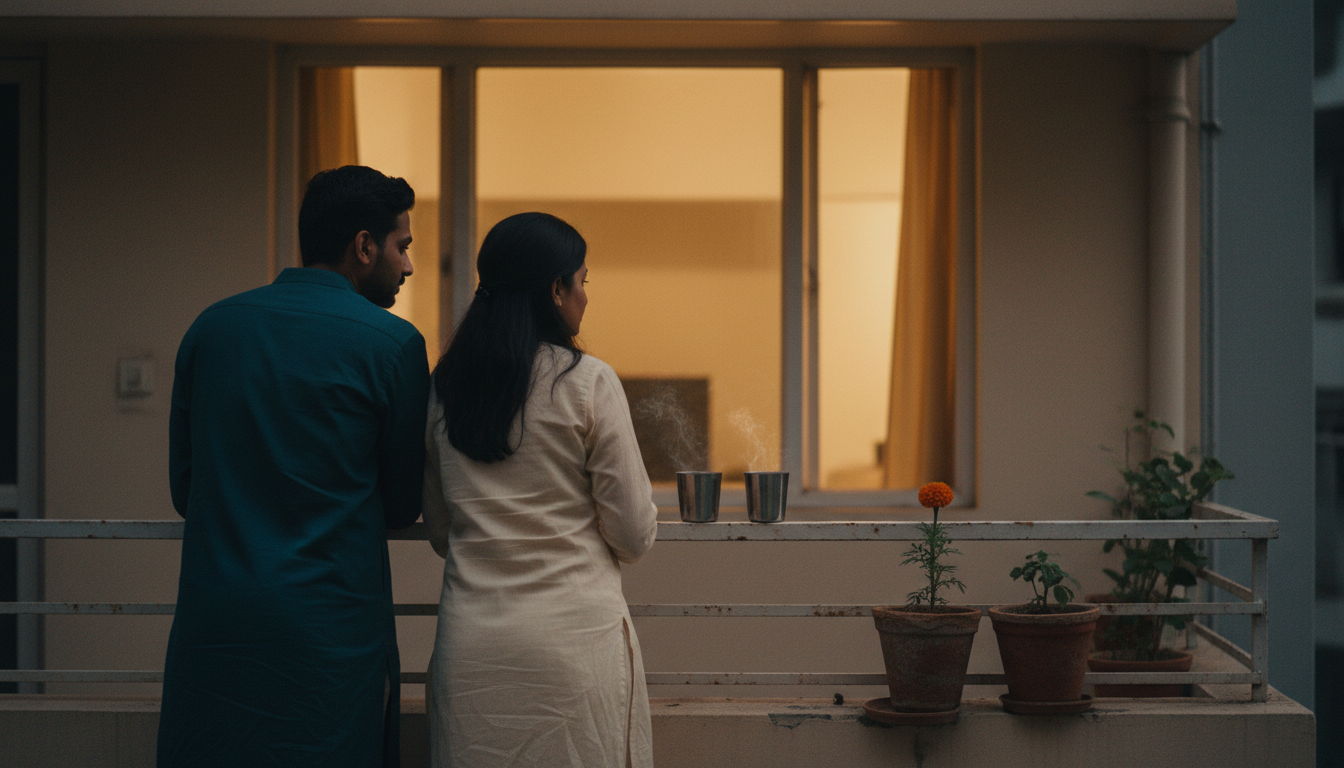
Both families are in the drawing room. Someone says, "You two go and talk." Now you are on the balcony with chai going cold, and you have twenty minutes.
You ask about hobbies. They say they like cricket and travel. You say you like movies. Then there is a pause, and one of you asks about the weather.
Nothing went wrong. It just was not a question that could show you much. A hobby question can be answered in one ready line, and then the pause comes back. Twenty minutes is short, so the questions need to be the kind that cannot be answered in one word.
What twenty minutes can and cannot tell you
Twenty minutes cannot tell you whether to say yes. Nobody can read a whole marriage from one balcony, and the person next to you is nervous too, with both families waiting inside. A calm answer might be real calm or careful politeness. A short answer might mean "I don't know you yet", not "I have nothing to say".
What the time can show you is small and useful: how this person describes their own life, how they talk about the people around them, and whether they can ask you something back. Treat these as a few things you noticed, not a verdict.
Three questions worth the time
1. "What does an ordinary weekday look like for you, from waking up to sleeping?"
This sounds boring on purpose. A plain day shows you what they actually care about: the morning call to their mother, the gym, the long commute, the late nights at work. Listen for what they mention without being asked. You are not grading the answer. You are meeting the real person behind the biodata.
2. "Tell me about the last time you disagreed with someone in your family. What happened next?"
Every home has disagreements, so this does not accuse anyone. The part to listen to is not who was right. Notice how they tell it. Do they talk about the other person with some fairness, or only as the problem? Did they say what they did, not just what was done to them? This is one story, so keep it as one story. It is a small window and not a measure of their character.
3. "Is there something you would like me to know now, so it does not come as a surprise later?"
This one gives them room. It might be about work, living with parents, money sent home, a health matter in the family, or how much they want to travel. If they say "nothing", that is fine. If they say something, listen to all of it before you reply. Either way, you have shown that early honesty is welcome with you, and that is worth having whatever they say.
How to ask so it does not feel like an interview
Twenty minutes with questions fired one after another feels like an interview, and it is hard to open up in one. Here is a small way to try it.
Ask one question. Then say nothing for ten seconds after they answer. It will feel long and a little awkward. Count slowly in your head if you need to. They may add a second sentence in that gap. It is worth waiting to find out.
Then answer the same question yourself, honestly, in a few sentences. If you only collect answers, it is an interrogation. If you give yours back, it is a conversation between two people.
One experiment for the balcony
Pick two of the three questions, not all of them. Twenty minutes is enough for two with room to breathe.
- Before you go in, decide which two you will ask. Write the words on your phone if that helps.
- Ask the first one. Stay quiet for ten seconds. Let them finish.
- Share your own answer in your own words.
- Afterwards, on your own, write down one thing you noticed and one thing you still do not know.
The first time you do this, it will feel odd to leave silence with someone you have just met. You are not trying to get a particular answer. You are trying to ask a question that gives them room to be a person.
Before you tell your family anything
When you step back inside, the room will want a yes or a no. You are allowed to say, "I would like another conversation." Twenty minutes gives you a first impression of how someone speaks, and it can be a good reason to meet again. It is not a reason to decide.
If anything you hear on the balcony, or anything in how a family is treating you, makes you feel pressured, frightened or unsafe, do not weigh it up as a compatibility question. Speak to someone you trust, and please read the note below.
This is relationship education, not therapy or medical advice. If any part of this describes what is happening in your relationship, a qualified professional or a local support service is the right next step, and not an article.
Each Sunday: one question to ask your partner, the research behind it, and one thing to try. The free Relationship Checkup is open to everyone, any time. Take the Relationship Checkup
One question a week.
Each Sunday: one question to ask your partner, the research behind it, and one thing to try. The free Relationship Checkup is open to everyone, any time.