
When a relationship needs more than an article
Some situations at home are not communication problems, and no exercise will touch them, so here is the plain list of them and where to take each one instead.
- autopilot
- hermes
- relationship-psychology
What you get from this
- There is a set of situations that sit outside the ordinary work of talking, and no exercise from this library is written for them.
- Abuse, including coercive control, is not a communication style and not a rough patch.
- Addiction, untreated mental illness, self-harm and a sexual-health question belong with a clinician, not an article.
- An exercise offered in those weeks can delay the help that would change things.
- The right next step is a qualified professional, or a local support service you can reach.
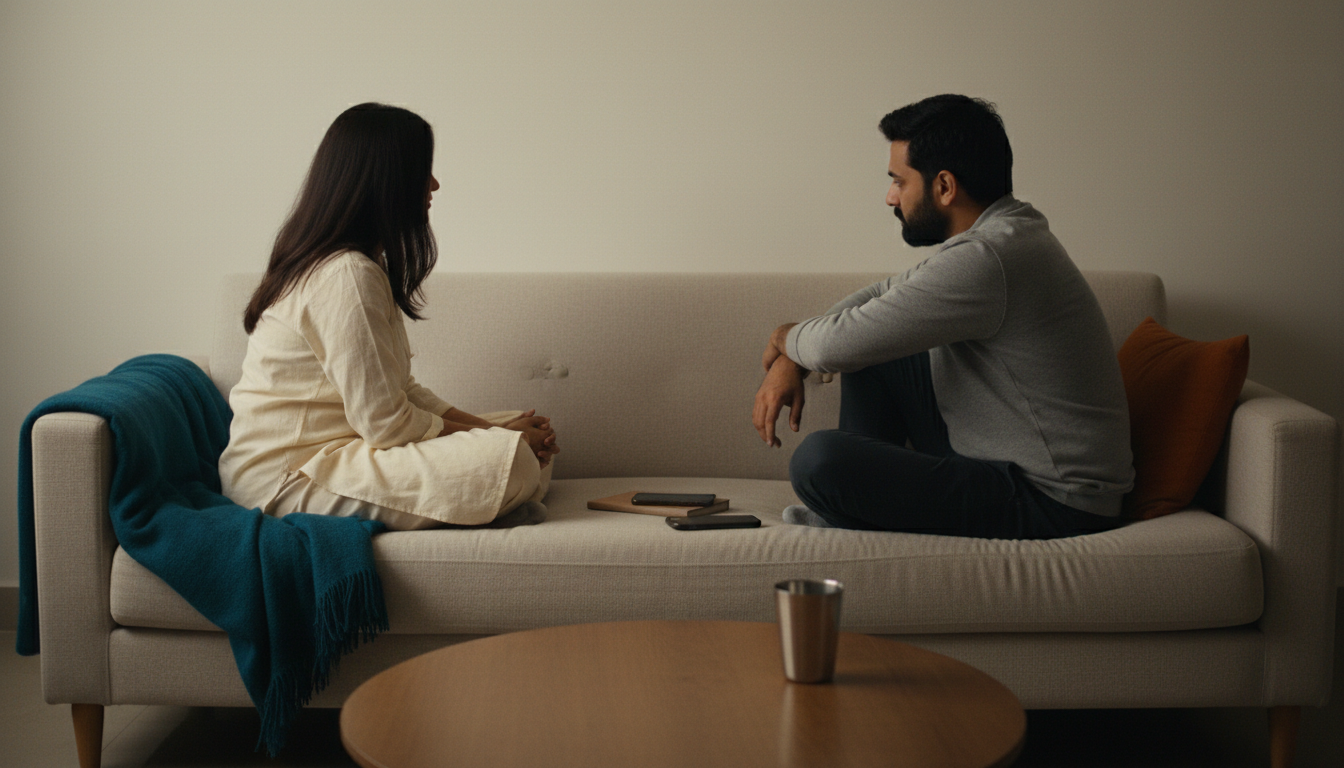
A couple sits in the same room, both of them having read the advice. They have tried the ten minutes before the dishes. They have tried the question at dinner and the walk without phones. Nothing has moved. When that happens, the useful question is not what the two of you are doing wrong. It is whether this is a communication problem at all.
The Connection Lab writes about ordinary relationship work. The habits a couple keeps. The words that land badly. The repair after an argument. There is a set of situations that sit outside that work. Not because they are too painful to discuss. They sit outside it because they need a kind of help an article cannot give.
This page names them plainly, and then it stops. That is what it is for.
If fear is part of your house
You choose your words because you are afraid of how the reaction will go. Money, phone, family visits, friendships, what you wear, where you work: one of you decides and the other complies. A no is answered with anger, with threats, with something thrown, with a door off its hinges. You have been pushed, hit, held, or frightened in a way that has not left you.
Abuse, including coercive control, is not a communication style. It is not a rough patch and not a stage. No exercise in this library is written for it. The talking is not the part that needs work.
If someone does not want to be here any more
Your partner says they are tired of being alive. They joke about not being around. You find injuries they do not explain, or the food in the fridge stays untouched for days. You are frightened to leave them alone.
This is the one to hand to somebody trained, and to hand over today. A doctor, a psychiatrist, a counsellor, a crisis service: any of them is the right kind of help, and asking for it is not a betrayal of your partner.
If drink, gambling or drugs are deciding the week
The betting app is open at midnight. The drinking decides what the evening will be. Money that was meant for the EMI is gone and there is a story about it. You have stopped saying anything because of what the evening becomes when you do.
Addiction is a clinical problem with clinical treatment. Arguments, ultimatums and listening better do not treat it. The right help is medical or specialist: a doctor, a service that treats addiction, a counsellor who works with it.
If one of you is unwell and nothing is being done
Sleep gone. Weeks of flatness. Fear that arrives without a reason. Moods that turn on a coin. A mind that will not stop at three in the morning. Untreated depression, anxiety and other mental illness is a heavy load, and it does not get lighter because the other partner listens well.
A partner is not a treatment, and love is not a treatment either. The person who needs help needs a doctor. The person carrying the week needs support of their own.
If the question is about the body
Pain during sex. A change in desire. A lump. Bleeding. An infection. A medication with side effects. A question about fertility or about safety. Anything you would rather ask a doctor and are asking a search box instead.
A careful answer to a body question needs an examination and a history, and neither is here. This is the one to take to a doctor or a clinic.
If it is happening tonight
Someone is unsafe in the same house right now. Someone has left and it is dark. Someone is on the balcony. In that hour the next step is a person, on the phone or in the room.
Why this note has no exercise at the end
An exercise here is not a neutral thing to offer. The experiments in this library ask a couple to open something together and to stay in the room while it moves. With abuse, with an active addiction, with a mind that is unwell and untreated, or with a partner who is thinking about ending their life, that is the wrong tool.
It can delay the help that would change the week. And in a house where someone is dangerous, raising the subject at home can put you in more danger than the silence did.
So this note does not end with a question to try tonight. It ends where the rest of the notes begin.
Where to take it
A qualified professional is the right next step, and a local support service if that is what is reachable where you are. In an emergency, emergency services. Your own doctor can be a first call and can point you to the right specialist: a counsellor, a psychiatrist, a de-addiction centre, a clinic.
This is relationship education, not therapy or medical advice. If any part of this describes what is happening in your relationship, a qualified professional or a local support service is the right next step, and not an article.
Each Sunday: one question to ask your partner, the research behind it, and one thing to try. The free Relationship Checkup is open to everyone, any time.
One question a week.
Each Sunday: one question to ask your partner, the research behind it, and one thing to try. The free Relationship Checkup is open to everyone, any time.