
Do not start it at 11 pm
Some conversations cannot survive a tired evening. Here are the states to watch for, and one sentence that puts a hard talk off to a named time without dodging it.
- autopilot
- hermes
- communication
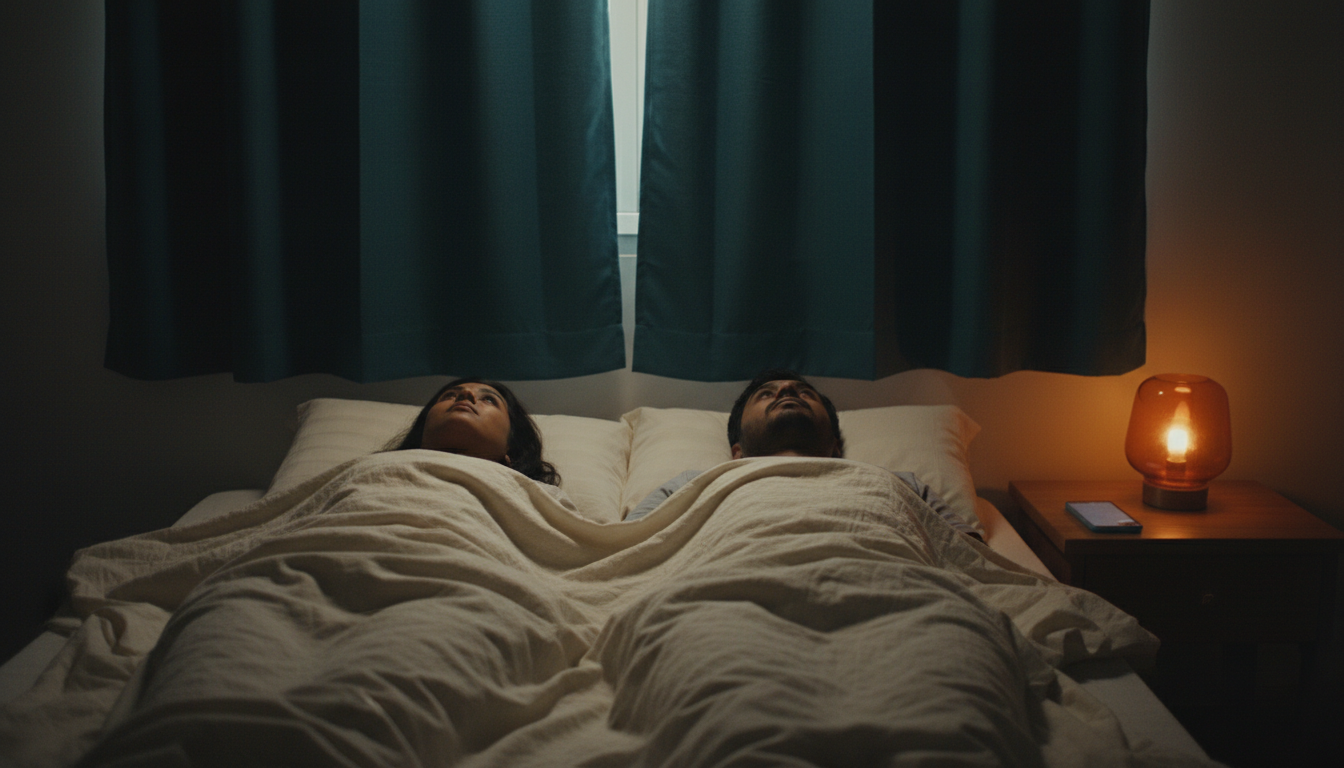
It is 11 pm. You both have office tomorrow. You start anyway.
It begins small. He leaves the wet towel on the bed again, or she says "we never decide anything about Diwali", and the other one answers. Ten minutes later you are talking about his mother, her tone and something from March. Both of you are lying in the dark with your eyes open, and neither of you is going to sleep.
So here is the question. If the thing is real and needs saying, why does it go so badly at that hour?
What a tired evening does to a talk
There is no need for a study to see this one, because you have lived it. A hard conversation asks two people to listen, stay calm and think of the other person's side. Those are the first things to go when you are tired, hungry or already angry.
As a working idea, worth trying and not proven, think of four states a hard conversation cannot survive:
- Tired. It is late, or you have been up since five. Everything sounds sharper than it is.
- Hungry. Dinner was a snack at the desk. A small complaint feels like a large one.
- Rushed. One of you has a call in twenty minutes, or the cab is downstairs.
- Already angry. You are still carrying something from the day, and this talk is where it will come out.
If even one of these is true for either of you, the talk can turn into a different talk. The towel becomes "you never listen". The Diwali plan becomes "your family". The topic was never the problem. The hour was.
Postponing is not dodging
It is easy to fear that waiting means the thing will never be said. So you keep going, because stopping feels like losing the point. Both fears are real. The answer is not to push on. The answer is to postpone with a time attached, so the other person knows you have not gone away.
Here is the sentence:
"I want to talk about this properly, and I am too tired to do it well. Can we do it Saturday morning, over chai?"
Three parts are in it. It says you want the talk, so it is not a refusal. It says the problem is your state and not their fault. And it names a when, so the silence that follows is a wait and not a punishment. "Later" is not a time. "Saturday after breakfast" is.
If you are the one being told, you can answer from the other side too: "Yes, Saturday. Thank you for naming it." Then let it go for tonight.
Keep the time
The sentence only works if the time is kept. If Saturday comes and nobody raises it, the next postponement will sound like an excuse. So whoever asked for the delay is the one who opens it.
When the time comes, begin with one line about what you want from the talk, for example: "I want us to sort out the Diwali plan, and I want us both to feel heard." Then say your one thing. Not the towel, the Diwali plan, March and his mother. One thing.
One thing to try this week
The next time you notice a hard talk starting after 10 pm, or when either of you is tired, hungry or rushed, say the sentence once, with a real day and a real time in it. Then put the phone down and go to sleep.
Notice two things afterwards: how the same topic sounds when you raise it at the agreed time, and how the night felt compared with the nights you carried on.
The first time, it feels odd and a little formal, as if you are booking an appointment with your own partner. You may feel the urge to say just one more thing. That is the uncomfortable part, and it passes. This note cannot say how your partner will respond. It can only say that a talk with a time on it is a different talk from one that started because nobody could stop.
Each Sunday: one question to ask your partner, the research behind it, and one thing to try. The free Relationship Checkup is open to everyone, any time. Take the free Relationship Checkup.
One question a week.
Each Sunday: one question to ask your partner, the research behind it, and one thing to try. The free Relationship Checkup is open to everyone, any time.