
Why the same argument keeps coming back
Why the same argument returns, what the research on perpetual problems and the demand and withdraw cycle says about the need underneath it, and one sentence to try the next time it starts.
- autopilot
- hermes
- conflict-repair
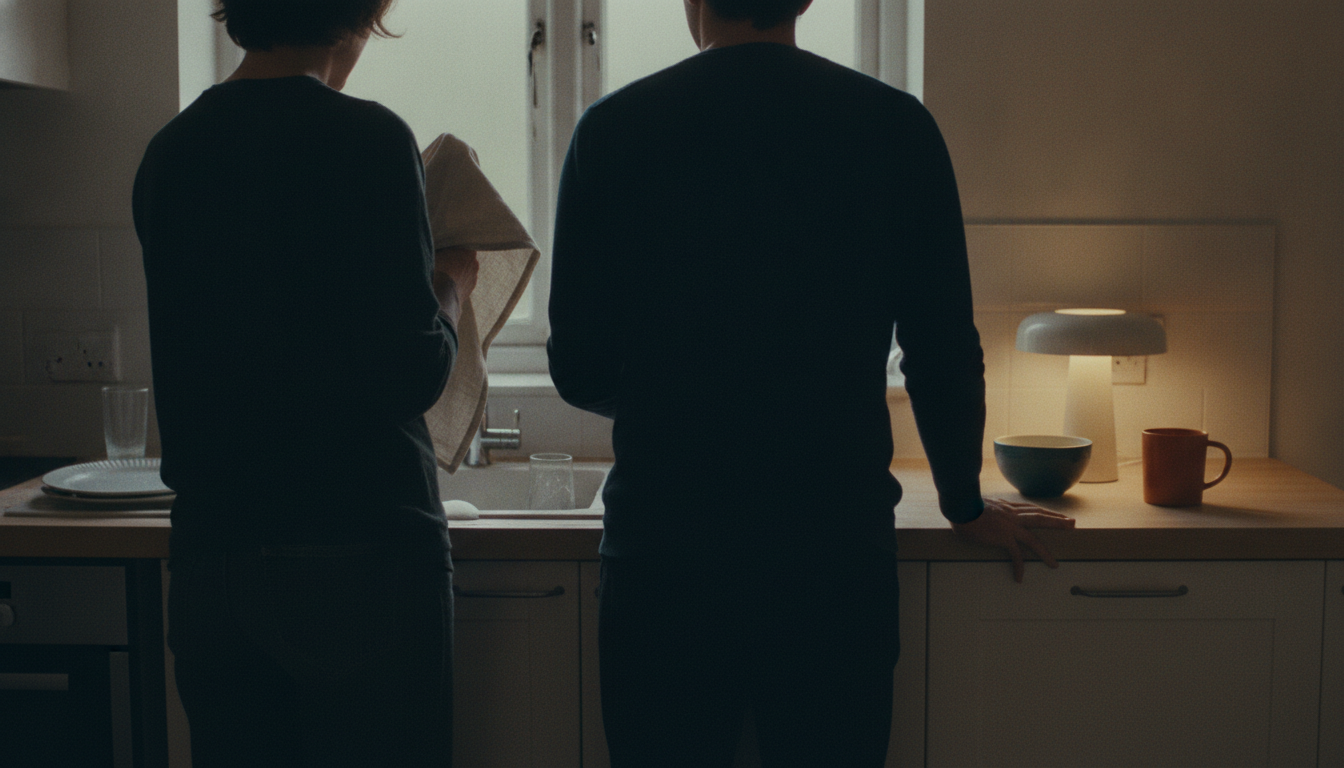
Nine at night, the kitchen half done, and the same argument is starting again. This time it is the bins, or the phone, or the message you did not reply to, and both of you know every line of it in advance. Nothing feels new except the hour. The question worth asking is not who is right tonight. It is why this one keeps coming back.
That question has a partial answer in the research. John Gottman, who watched couples argue in his laboratory for decades and then followed them for years afterwards, reported that about 69 per cent of the problems couples raise are what he called perpetual, the same disagreement returning long after the practical question was settled. The difference underneath is real, and it does not resolve, which is why the fix you agreed to at eleven at night quietly expired by the weekend.
So the topic is not the argument. The topic is the costume the argument wears. A missing bin, a phone left on the table, a plan made without checking first: each is a stand-in for something one of you is reaching for and neither of you has said in plain words.
Attachment research gives that reach a name. In the view of adult love that comes from John Bowlby's attachment theory, a partner is the person you turn to when something is wrong, and when that contact feels unreliable, the alarm comes out sideways, as pressure, complaint, or a cold retreat. Sue Johnson, whose emotionally focused therapy is built on this view, describes those moments as protest: a move toward the person rather than an attack on them. The volume tends to match the size of the fear rather than the size of the issue.
There is a matching pattern in the laboratory work on how couples argue. In a study of 31 couples published in the Journal of Personality and Social Psychology, Andrew Christensen and Christopher Heavey asked each couple to discuss one change the husband wanted and one the wife wanted. Both partners pressed harder when the topic was the change they wanted, and pulled back when it was the other person's. That is the cycle researchers call demand and withdraw, and it feeds itself: the more one of you pushes, the more room the other one needs, and the more room they take, the harder the first one pushes.
This is why the same fight survives every solution. You are not arguing about the bins. One of you is asking whether your life together is still shared, and the other is asking whether there is still room to breathe inside it. Neither question is unreasonable, and neither can be settled by a rota on the fridge. The Gottman Institute's own guidance for recurring problems like these is not to solve them but to keep talking about the meaning underneath them, which is a slower and more honest project.
The sentence to try
Next time the familiar one starts, resist the case you have already made a hundred times. Name the pattern instead, in one sentence: I think this is the one that keeps coming back. Then ask one question and stop talking. What do you need from me in this that you have not said yet?
Then let ten seconds pass. Ten real seconds, without filling them. The first answer is rarely the whole need, and the second sentence, the one that arrives after the pause, usually is. Do not answer it with your own list, and do not fix it on the spot. Afterwards, write one line: what you heard them ask for, in their words. Notice whether that line mentions the bins at all.
Then do your half, on a different evening, when neither of you is tired. Say what you are reaching for in one sentence about the two of you, not about the dishes, and then stop and let it stand. The first few times you say it will feel staged and slightly ridiculous, and that passes. What you are listening for, in both directions, is the need rather than the evidence for who was right.
One warning. If this argument has already escalated past words, or if naming the pattern makes the evening worse, stop and try it another night. This is a small habit, not a rescue.
What this will not do
It will not delete the disagreement. Perpetual problems stay perpetual, and the difference between two people sharing a kitchen is not a fault to be corrected. It also will not tell you what your partner needs; that part comes only from asking, and then being quiet long enough to hear the answer. What can change is what the two of you are arguing about, from who was right last night to what each of you is reaching for. That is a smaller shift than it sounds, and it is the one that makes a recurring argument survivable, and occasionally useful.
The free Relationship Checkup is open to everyone, any time.
One question a week.
Each Sunday: one question to ask your partner, the research behind it, and one thing to try. The free Relationship Checkup is open to everyone, any time.